Agriculture Technology (AgriTech)
Introduction
Agriculture Technology, or AgriTech for short, is the term that denotes the use of contemporary tools, machines, scientific methods, and digital technologies for the purpose of enhancing agricultural productivity and sustainability. In the earlier days, the agricultural sector was almost entirely reliant on human labor and traditional methods. Nevertheless, the increasing technological advancements have made agriculture more effective, accurate, and eco-friendly. In this regard, AgriTech is one of the main contributors that make it possible to feed the ever-growing world population.
Historical Development of Agricultural Technology
At the very outset, farmers used simple tools like plows, sickles, and animals for power. Then the Industrial Revolution came and with it the introduction of mechanized farming equipment that drastically raised the amount of crops produced. After that, the Green Revolution made the new high-yield seeds, chemical fertilizers, and irrigation systems available. In the last few decades, agriculture has been turned into a data-centric industry by the introduction of digital technologies, biotechnology, and automation.
Types of Agricultural Technology
1. Farm Machinery and Equipment
The use of modern machines has completely replaced the old methods of farming.
- Tractors and combines
- Drilling machines and plowing machines
- Automated watering systems
This means that people doing the farming can work on larger pieces of land with less physical strain on their bodies.
2. Precision Agriculture
The practice of precision agriculture is using data and technology in the right way to make farming practices more efficient.
- Mapping of the fields with the help of GPS
- Sensors for soil and crops
- Technology that varies the rate of application (VRT)
In this way, the farmers are able to make better use of the inputs like water, fertilizers, and pesticides.
3. Biotechnology in Agriculture
The use of biotechnology has come a long way in improving the quality and resistance of crops.
- Genetically modified organisms (GMOs)
- Seeds that are resistant to diseases
- Natural fertilizers and pesticides
And so, the amount of crops produced increases, and on the other hand, the impact of the environment is lessened.
4. Irrigation Technology
Water use is made more efficient with sophisticated irrigation systems.
- Drip irrigation
- Sprinkler systems
- Smart irrigation controllers
Consequently, the water that is not used is reduced and the crops get the water they need.
5. Digital and Smart Farming
Digital instruments are a great help to farmers making informed decisions.
- Farm management software
- Weather forecasting apps
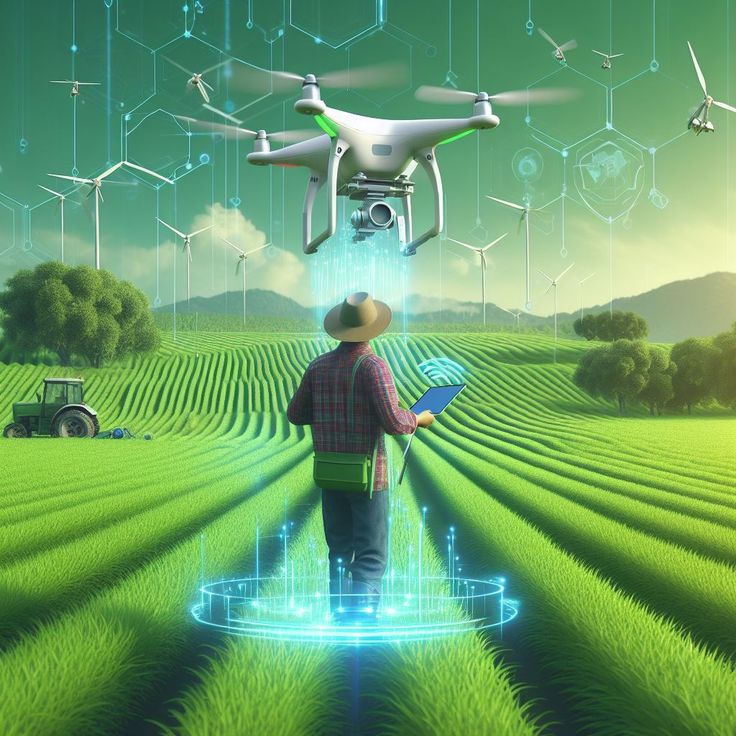
- Drones for crop monitoring
Furthermore, smart farming not only improves productivity but also minimizes risks.
Significance of Agricultural Technology
Agricultural technology is indispensable for:
- Food production increase
- Labor reduction
- Better crop quality
- Resource conservation
- Rural development support
Without the aid of modern agricultural practices, it would be very hard to meet the global demand for food.
Benefits of Agricultural Technology
- More crops with higher quality
- Resource less wasted and used more efficiently
- Less farming costs
- More income for farmers
- Food that is better and safer
Challenges in Agricultural Technology
AgriTech has a lot of upsides, but it also comes along with an array of challenges:
- High initial capital investment required
- Technology is nearly inaccessible in the countryside
- Only a scant number of individuals possess the needed technical skills
- Environmental concerns and ethical dilemmas have emerged as the major factor
- It is clear that the support of the government and the training of the workers would have been the major factors for the smooth arrival of these technologies.
Future of Agricultural Technology
The fate of AgriTech is the harmony of nature and tech.
- AI-enabled observation and analysis of plants and crops
- Self-driven robots and tractors
- Vertical farming with reduced footprint
- Precision farming vis-à-vis meteorology
In this way, farming will become no stricter to the ecosystem and will be more adaptable.
Conclusion
In the end, the agricultural technology has played the role of a magical wand turning the traditional agriculture to modern, efficient, and eco-friendly. The use of machinery, digital tools, and scientific methods not only provide farmers with the opportunity to produce more but also help in the protection of the environment. Provided that it is responsible, Agricultural Technology will be an important factor in the future Food Security and Sustainable Development of the planet.