Generative AI: Transforming Creativity, Automation, and Intelligence
Introduction
The 21st century has witnessed its most disruptive technological advancement through the development of generative AI. The technology enables Generative AI to produce original content which includes text and images as well as videos and music and code and synthetic data. The public now uses this technology through tools which include OpenAI’s ChatGPT and DALL·E and Google’s Gemini and Meta’s Llama.
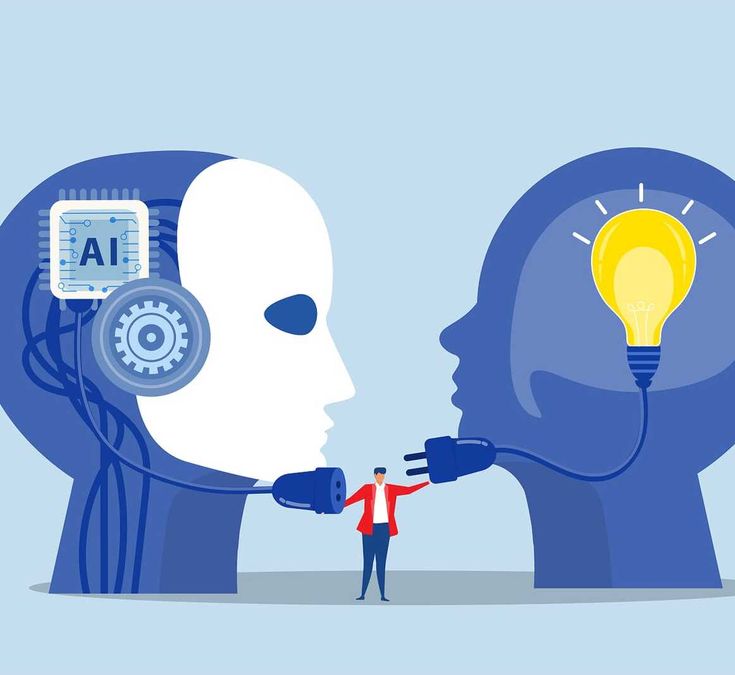
The introduction of Generative AI enables businesses to automate their operations while helping digital artists create new art forms which lead to rapid changes in multiple sectors.
What is Generative AI?
Generative AI refers to machine learning models that can generate new data similar to the data they were trained on. The systems acquire knowledge about patterns and structures and relationships which exist within extensive data sets and they utilize that knowledge to create new content.
Common types of generative models include:
- Large Language Models (LLMs) – Generate human-like text
- Diffusion Models – Create high-quality images and videos
- Generative Adversarial Networks (GANs) – Produce realistic images and synthetic data
- Modern text and multimodal AI systems depend on Transformer-based Models as their foundation.
The operation of Generative AI systems can be understood through three key processes.
The majority of modern Generative AI systems utilize deep learning together with transformer architecture as their primary technological foundation. The following presents a basic explanation:
Training Phase
The model requires training with extensive datasets which include text and images and audio elements.
Pattern Recognition
The system develops understanding of word and pixel and sound statistical correlations.
Generation Phase
The model generates its most probable next parts when it receives input which enables it to produce logical text.
The AI system creates an original space exploration story through its training pattern recognition system because it lacks access to any existing material.
Applications of Generative AI
1. Content Creation
- Blog writing
- Social media posts
- Marketing copy
- Scriptwriting
- Image and video generation
2. Software Development
- Code generation
- Bug fixing
- Documentation writing
- Automated testing
3. Healthcare
- Drug discovery
- Medical imaging enhancement
- Synthetic patient data for research
4. Business & Productivity
- Chatbots and customer support
- Automated reporting
- Personalized recommendations
- Workflow automation
5. Creative Industries
- AI-generated art
- Music composition
- Game asset creation
- Film pre-visualization
Benefits of Generative AI
Increased Productivity
The benefits of Generative AI technology produce three main advantages.
Enhanced Creativity
The system increases its work output because it can continue to operate while simultaneously boosting its work performance.
Cost Efficiency
The system functions as a creative assistant which helps writers, designers, and developers produce innovative work.
Personalization at Scale
The system lowers operational costs which affect all marketing, support, and development operations.
The system enables companies to deliver tailored content which meets the individual needs of more than one million users.
Challenges and Risks
Generative AI systems present two main dangers because they produce beneficial outcomes.
1. Misinformation & Deepfakes
AI-generated content can spread false information.
2. Copyright & Intellectual Property Issues
AI-generated content ownership rights exist in a legally uncertain territory.
3. Bias & Ethical Concerns
Models may reflect biases present in training data.
4. Job Displacement
Automation may impact certain job roles, especially repetitive knowledge work.
5. Data Privacy
Training data handling must comply with regulations.
The Future of Generative AI
The future of Generative AI is moving toward:
- Multimodal AI that enables users to integrate text and image and video and audio input.
- AI agents that can complete advanced operations without any need for human involvement.
- Real-time AI collaboration tools
- Industry-specific AI models
- Stronger AI governance and regulation
The advanced computing capabilities together with enhanced model optimization methods will enable complete deployment of generative artificial intelligence in every digital system.
Conclusion
Generative AI functions as a content creation tool that transforms how users interact with machines according to its users. The system enables organizations and individuals to create content and solve problems through its ability to merge creative thinking with computational power.
The development of this advanced technology requires both responsible development methods and ethical governance practices together with transparent operations to deliver benefits that will extend to the entire society.