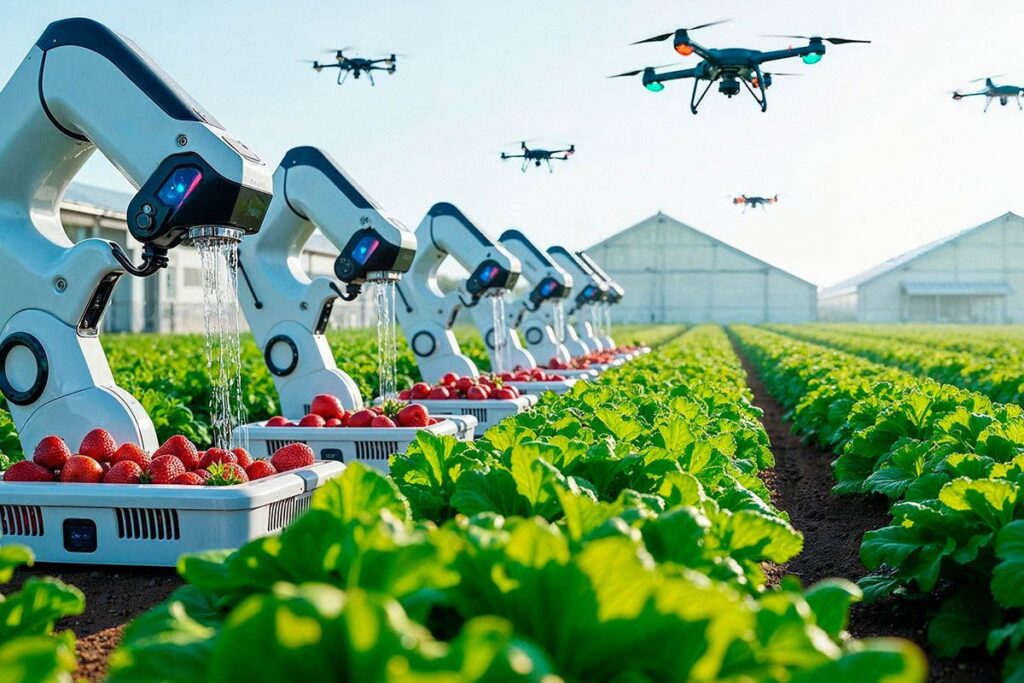
Agricultural Machinery Revolution: Technology Boosting Farm Productivity
Agriculture has always been the backbone of human civilization. From the earliest hand tools to today’s precision equipment, technological advancements have consistently transformed farming. The Agricultural Machinery Revolution which has occurred during the past few decades has transformed agricultural practices. Because it enhances farm productivity and environmental sustainability and economic profitability. The article investigates the revolutionary technologies which drive this transformation in agriculture and their current agricultural effects together with their future implications for agriculture.
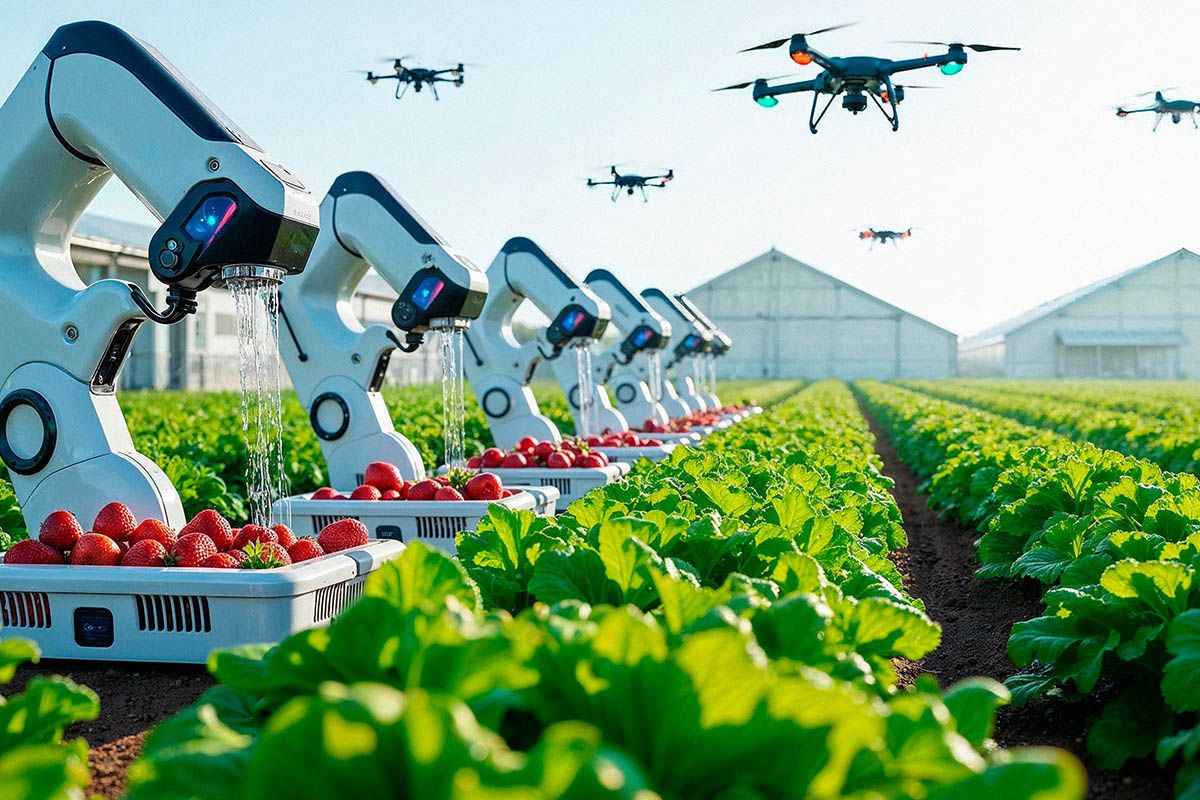
1. The Evolution of Agricultural Machinery
Agricultural machinery started its development process when people used basic implements such as wooden plows and hand-held sickles for farming. The Industrial Revolution introduced mechanization which replaced manual work with steam-powered machines and later internal combustion engine-operated tractors and harvesters and balers.
The most important agricultural productivity improvements have come from digital and smart technologies which agricultural producers use today. The various technological advances are changing the entire process which farmers use to cultivate their crops from planting through to harvesting.
2. Key Technologies Powering the Revolution
a. Precision Agriculture
Farmers use technology to track and analyze their fields because precision agriculture requires this approach. Through precision agriculture farmers can now manage their fields through specific area management which leads to better resource utilization and environmentally friendly farming methods.
GPS and GNSS Guidance:
The Global Positioning System (GPS) provides tractors and equipment with navigation accuracy that enables them to navigate through planting and fertilizing and spraying operations without creating any overlaps or gaps.
Variable Rate Technology (VRT):
VRT controls seed and fertilizer and pesticide distribution throughout a field according to actual soil conditions and plant health and expected crop yield.
Soil and Crop Sensors:
The sensors installed in fields and the equipment perform real-time measurements of soil moisture and nutrient content and plant health which enables farmers to make informed decisions.
b. Automation and Robotics
Automation technology decreases workforce requirements while it enhances operational efficiency:
Autonomous Tractors and Harvesters:
Driverless machinery uses sensors and AI to navigate fields while performing tasks and working for extended periods without requiring breaks.
Field Robots:
The smaller robots can complete weeding and seeding and monitoring duties in specialty crops through their capability to operate with high accuracy while causing little soil disturbance.
c. Drones and Aerial Imaging
Unmanned aerial vehicles (UAVs) use high-resolution multispectral cameras to provide farmers a complete aerial view of their fields. The aerial data provides information that allows farmers to track plant development and identify pest problems and evaluate water shortages before they reveal visible signs of distress.
d. Internet of Things (IoT) in Agriculture
The Internet of Things (IoT) system establishes connections between agricultural machinery and its accompanying sensors and operational systems to establish a unified data collection mechanism.
Enhanced Environmental Stewardship
Farmers achieve better soil protection through precise agricultural input application which reduces chemical runoff. Smart irrigation systems enable water conservation while fuel-efficient machinery operations lead to lower greenhouse gas emissions.
Improved Decision-Making
Farmers use real-time data together with predictive analytics as their tools to forecast future problems which enables them to make better decisions that result in improved crop productivity.
4. Adoption Barriers
The agricultural machinery revolution faces multiple obstacles which prevent its advantages from being realized.
High Initial Costs
Small and medium-sized farms face financial challenges when they need to purchase advanced machinery together with technology platforms. The emerging financing and cooperative ownership models work to solve this financing problem.
Technical Knowledge and Training
Complex systems need people to learn specific technical skills for their successful operation. Farmers need training and support services to enable them to fully utilize data-driven technologies and automated systems.
Data Management and Security
Farmers who collect extensive data about their farms need to resolve their data storage challenges because they need this solution to identify their data ownership rights and create their data security strategies. Security systems need to match the current data management needs of organizations which those systems protect through their data protection capabilities.
Infrastructure Requirements
Rural communities which face difficulties accessing the internet need broadband networks which must deliver reliable internet service needed to support Internet of Things devices and cloud computing systems.
The Future of Farming
The agricultural machinery revolution continues to evolve as a new technological development.
Swarm Robotics
The team will develop a new system which uses multiple small robots to create an automated process that will replace current methods for weeding and planting and field monitoring.
Fully Connected Farms
Farms that connect all their machines and sensors together with their crop production data will create intelligent systems which will improve their operational efficiency.
Sustainable Technologies
The future of agriculture will become more environmentally friendly through the use of electric tractors and renewable energy systems together with carbon-monitoring technologies.
Sustainable farming methods have become critical in response to the increasing global population and the growing effects of climate change. Agricultural machinery innovations increase productivity but they also help farmers produce enough food to meet future demands while practicing responsible farming methods.
Conclusion
The Agricultural Machinery Revolution brings about a complete transformation of food production methods. Farmers achieve better results and enhanced operational efficiency through sustainable practices by using precision technologies and automation and data analytics and connectivity solutions. The agricultural sector faces challenges, but the technologies bring transformative benefits which will create a resilient agricultural system for global food production.