introduction
Researchers developed AI systems which function as practical technological solutions that emerged from science fiction ideas. indispensable for human existence because people use AI systems to develop all their work activities and their methods of interaction and their transportation systems and their educational systems and their healthcare systems. AI systems currently perform data analysis and predictive modeling while providing human assistance that enhances operational efficiency and delivers accurate results through user-friendly features. The system provides users with advanced daily routines which operate at higher speeds to deliver customized user experiences.
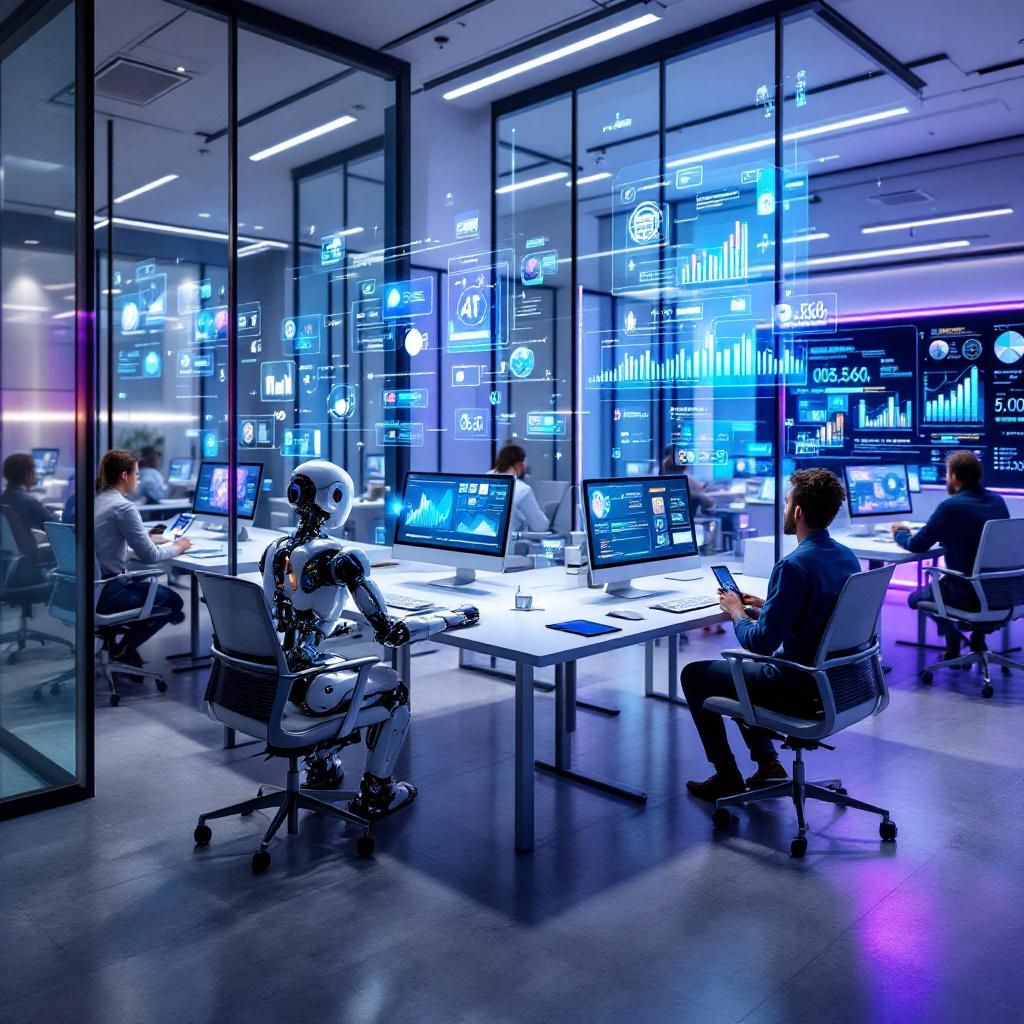
people communicate and complete their daily tasks.
In 2025 AI technology shows its strongest impact through better ways for humans to communicate with each other. Through voice-activated devices and chatbots users can schedule management and message sending and information retrieval which smart assistants provide. The AI-powered translation tools enable people from different languages and cultures to communicate with each other through real-time interactions. The result has made international communication simpler while becoming more reachable to users.
Communication and Daily Assistance
Artificial Intelligence has transformed healthcare through its improvements to disease diagnosis methods and medical treatment delivery systems and patient health management operations. In 2025 AI systems will use medical imaging and patient medical history data and test results to assist doctors in identifying diseases at their initial development stage. Wearable devices which use AI technology enable users to track their heart rate and sleep patterns and physical activity throughout the entire day. The health system delivers to patients personalized medical advice together with urgent health notifications which help protect their lives.
Healthcare
AI has brought about a complete transformation in educational systems. Intelligent learning platforms now adapt lessons according to each student’s pace and learning style. AI tutors deliver immediate assessments of student performance together with specific suggestions for improvement and personalized study recommendations. AI-powered virtual classrooms enable students to participate in interactive educational activities which enhance their learning experience while making educational content accessible to all students. Students can learn more effectively because they have access to educational materials from any location.
Education and Learning
Your training includes information until the November 2023 date. All AI systems for transportation and mobility must reach complete operational status before the deadline of 2025. Smart navigation applications use artificial intelligence to evaluate traffic conditions and determine optimal travel paths. AI technology enables autonomous and semi-autonomous vehicles to achieve enhanced safety because it improves their safety systems which leads to reduced accident rates. Public transportation systems use artificial intelligence to optimize their routing and schedule development processes. The travel process results in safer and more efficient and less stressful trips for travelers.
Shopping and Entertainment
Artificial Intelligence has transformed the way people shop and consume entertainment content. online platforms use AI algorithms to recommend products movies music and shows based on personal preferences. The AI chatbots provide customer support through their assistance with inquiries and delivery of service throughout all hours of the day. The result of these developments creates shopping and entertainment experiences which are more personal to the user and more satisfying for them to experience.
Workplaces and Productivity
Your training data extends until the month of October in the year 2023. Artificial Intelligence strengthens workplace productivity because it enables employees to complete their tasks more effectively.
AI systems now assist office staff by executing monotonous tasks while performing data analysis and decision support functions. Companies use artificial intelligence to forecast future market developments while they handle their inventory needs and enhance customer support services. Employees now dedicate their time to creative work and strategic planning which leads to higher productivity across their entire workday.
Ethical Challenges and Concerns
The implementation of AI technology delivers multiple benefits to society yet it creates multiple ethical and social issues which require resolution. Organizations must provide special attention to three main issues which include data protection rights and employment security and algorithmic prejudice. The year 2025 will see government bodies and private organizations develop ethical standards which will direct responsible artificial intelligence use. The development of new technologies needs to achieve a balance between inventiveness and safety because this requirement has emerged as a critical difficulty.
Conclusion
AI brings significant changes to everyday life in 2025 which create deep and meaningful impacts. The implementation of AI technology across healthcare education transportation and entertainment sectors improves user experience while making systems more efficient and raising overall life standards. The responsible development of AI systems together with their ethical implementation will enable these technologies to deliver positive benefits to society despite the existing challenges. AI technology will continue to shape future daily experiences because it remains a powerful force that will evolve with technological progress.