How Modern Technology Is Transforming the Future of Gaming
Introduction
Video games now provide more than entertainment because modern technology transforms their interactive social platforms into virtual environments which enable users to create real economic value. The development of video games started with basic pixelated designs which today have advanced into interactive cinematic universes that operate on cloud-based systems and use AI technology to create dynamic virtual environments which respond to player decisions. The advancements in technology create new possibilities for game design which establish fresh methods of player interaction while they develop new cultural patterns that extend throughout the world.
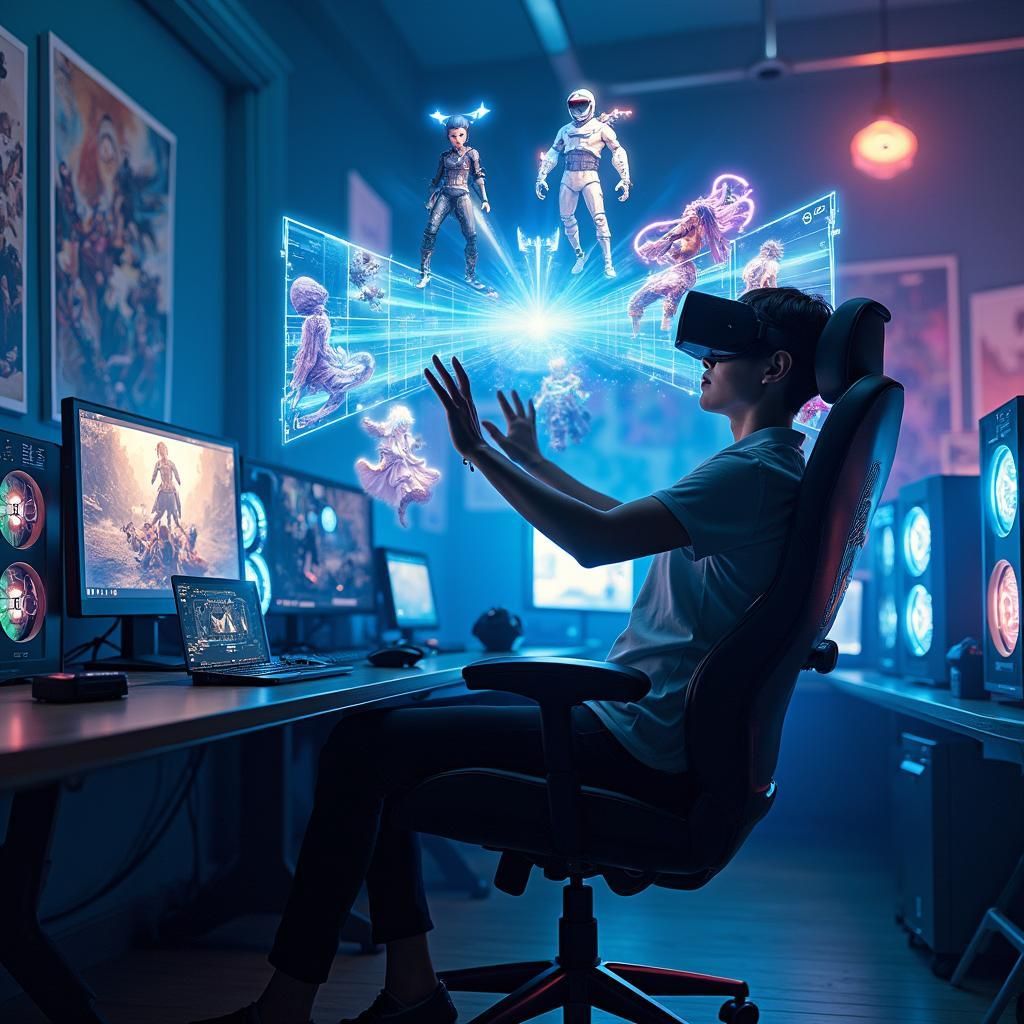
1. Immersive Graphics and Realism
The gaming industry which began with basic visual elements has reached a new level of development through its ability to create authentic visual experiences. Developers use advanced graphics hardware together with ray tracing rendering techniques to create real-time simulations of light and shadow and reflection effects and texture details. Games now achieve cinematic visual quality because they support both 4K and 8K resolutions which enable players to experience virtual worlds that feel real.
The graphical enhancements of Unreal Engine and Unity game engines allow developers to create detailed environments which were impossible to construct in the past without extensive teams and financial resources.
2. Artificial Intelligence (AI) Revolution
AI is revolutionizing gaming through its impact on multiple areas of game development.
Smarter NPCs
Non-player characters now demonstrate improved flexibility because they can use AI technology to create interactive experiences which react to player actions and develop combat strategies and conduct dynamic mission adjustments.
Procedural Content Generation
AI enables automatic generation of game components through its ability to create virtual worlds and develop missions and build game stories which results in distinct gaming experiences for each session while eliminating unnecessary design tasks.
AI-Assisted Development
Major companies are testing generative AI tools which enable them to create virtual game environments and develop new games. Ubisoft uses generative AI to create player content which modifies itself according to live player interactions but this innovation has sparked a discussion about how to maintain artistic originality while using automated systems.
3. Cloud Gaming and Streaming
The system of cloud gaming operates by transferring all processing tasks to remote servers which subsequently deliver gameplay content through streaming to your device. This process operates in a manner that resembles Netflix which streams movies to its viewers.
Accessibility and Convenience
Cloud platforms which include Xbox Cloud Gaming and NVIDIA GeForce NOW and Google Stadia provide non-powerful hardware users with access to high-end gaming. This breaks down cost and hardware barriers for players around the world.
Seamless Play Anywhere
Players can begin their gaming experience on mobile devices which they can follow by using tablets and then finish on their home television screens because cloud synchronization keeps their game progress intact.
4. VR (Virtual Reality) and AR (Augmented Reality)
- Virtual Reality (VR) and Augmented Reality (AR) technologies allow players to experience new game worlds.
These technologies let players interact with virtual spaces using physical movements.
VR technology enables players to explore complete virtual environments.
Players can navigate and interact with these environments using natural body movementS
The augmented reality system projects digital game content into real physical spaces.This creates interactive gaming experiences using real-world locations.A popular example of this technology is the game Pokémon G0
Future technological advancements will create headsets which will provide users with better comfort because they will become lighter and cheaper. The future of virtual reality gaming will become a common experience for people.
5. Cross-Platform Integration and Social Gaming
Modern gaming increasingly blurs the lines between platforms
- Players can now compete across different gaming systems which include console and PC and mobile platforms.
- The streaming services Twitch and Kick and YouTube Gaming transformed gaming into a form of entertainment that attracts viewers while creating online communities.
The current gaming trends develop from individual pastimes into collective activities which connect people through streaming and live events and worldwide competitions.
6. Blockchain and Player Ownership
Blockchain technology enables players to acquire complete ownership rights of their digital in-game items. Players can establish ownership rights for in-game assets through NFTs and decentralized systems which they can buy sell or trade. Players can earn real-world financial rewards by using the play-to-earn system which this technology enables.
7. eSports and Competitive Gaming
Competitive gaming has achieved professional status through its expansion which has transformed gaming into a recognized career path.
- Professional tournaments attract large audiences who generate substantial revenue through their sponsorships.
- International players compete against each other in major esports tournaments.
Popular games include Fortnite, League of Legends, and Dota 2.
These competitions often feature million-dollar prize pool
Current gaming trends create a worldwide competitive gaming scene which extends beyond its original purpose of serving as entertainment.
8. Challenges and Considerations
- The upcoming gaming technological developments will create extensive possibilities which people need to address because they will create access problems.
- Accessibility requires people to obtain both advanced computing systems and fast web access.
- Privacy Security: The introduction of cloud gaming together with blockchain technology will generate fresh issues regarding user data protection.
Some creators believe that AI will decrease their creative abilities when it is misused.
Conclusion
Modern technology creates more immersive gaming experiences through its ability to enable players to interact socially while offering better access to games. The future of gaming will become more innovative and inclusive through AI-driven worlds and cloud-powered experiences and virtual realities and digital ownership. Players and creators will obtain new methods to connect with others through these technological developments which enable them to build digital spaces that mirror our real world.