Manufacturing Technology Introduction
When we talk about manufacturing technology, we are actually referring to the whole process of using tools, machines, systems, and other processes to change raw materials into finished or semi-finished products. It is industrial development’s and economic growth’s top most pillar. From primitive tools used by ancient people to today’s super-smart fully automated factories, manufacturing technology has always been a step ahead in terms of efficiency, quality, precision, and productivity improvement.
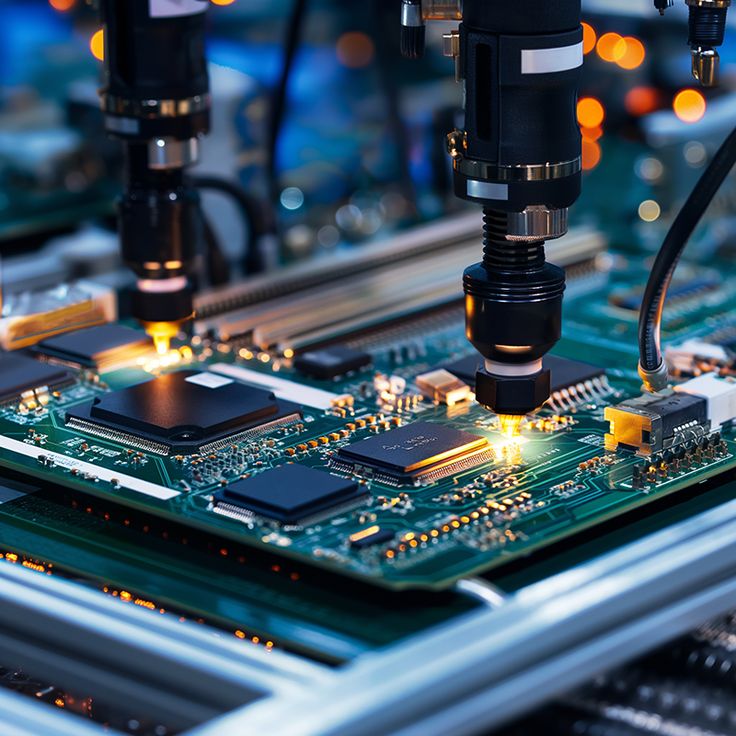
Nowadays, practically all the products we consume such as smartphones, cars, medical devices, appliances, and clothes have a history of manufacturing technology behind them. The manufacturing technology integrates the concepts of mechanical engineering, electrical engineering, materials science, computer science, and management into one big field and thus its ultimate goal is to create and perfect the production systems.
Manufacturing technology not only focuses on how products are made but also emphasizes cost reduction, waste minimization, energy efficiency, safety, and sustainability. As global competition increases, manufacturers rely heavily on advanced technologies to remain competitive in international markets.
2. Historical Evolution of Manufacturing Technology
2.1 Early Manufacturing Systems
The first step in the process of manufacturing goes back to the Stone Age when the humans were able to cut and smooth wood, bone, and skin using stone tools. The early production of artifacts was totally based on human labor and skill.
The early civilizations like Mesopotamia, Egypt, the Indus Valley, and China contributed greatly to the development of manufacturing processes. They discovered various techniques such as making pottery, casting metals, weaving textiles, and even making bricks. The introduction of the wheel, the plow, and simple machines led to a massive increase in production output.
2.2 The Craft Production Era
In the Middle Ages, the craft production system ruled the manufacturing sector where skilled craftsmen and women worked with their hands to produce goods. Each item produced was different, and the quality was very much dependent on the skills of the craftsman. Although craft production methods did allow the customers to have their preferences incorporated into the product, it was still a very slow and costly process, which could not cater to the needs of the mass market.
2.3 The Industrial Revolution
The Industrial Revolution (18th–19th century) was an epoch-making revolution in the sphere of technology related to the manufacturing sector. Steam power, mechanized looms, and machine tools were among the technological innovations that changed production drastically.
The most significant happenings were:
Steam engines were utilized
Factories were established
Labor was divided
Textile production was mechanized
This time period was responsible for the creation of mass production and modern manufacturing systems.
2.4 Mass Production and Automation
The 20th century saw a swift turn in the manufacturing sector due to new technologies like electricity, assembly lines, and automation. Ford’s moving assembly line not only famous for the car industry but also played an important role in changing the whole scenario by cutting down the time and cost of production.
Subsequent innovations were:
- Numerical Control (NC) machines
- Computer Numerical Control (CNC)
- Industrial robots
- Automated material handling systems
2.5 Digital and Smart Manufacturing
Manufacturing has been digitalized during the 21st century, the digital transformation era. AI, IoT, Big Data, and cloud computing are the main technologies that not only lead the transformation but also make it possible to have smart, interconnected systems referred to as Industry 4.0.
3. Manufacturing Technology Classification
Manufacturing technology is a term that can be divided into major parts based on the production methods, the degree of automation, and the kinds of processes involved.
3.1 According to Production Volume
a) Job Production
- Low production volume, high variety
- Products tailored to individual customers
- Demand highly skilled workers
- Examples: custom furniture, tool room
b) Batch Production
Medium production volume, medium variety
Batches of products are made
Examples: pharmaceuticals, garments
c) Mass Production
High production volume, low variety
Production of the same type of goods
Examples: automobiles, electronics
d) Continuous Production
Extremely high production volume
Constant material flow
Examples: oil refining, cement plants
4. Manufacturing Processes
Manufacturing processes are a set of methods that are employed to convert raw materials into finished products. The choice of these processes depends on a variety of factors such as the type of material, product design, the cost in question, and the quality demanded.
4.1 Casting Processes
Casting is a method which consists of pouring liquid material (molten) into a mold and letting it cool down to solidify in the desired shape.
The most common casting techniques are:
- Sand casting
- Die casting
- Investment casting
- Centrifugal casting
- The process of casting is dominant for the production of intricate forms that cannot easily or economically be made by machining.
4.2 Forming Processes
Plastic deformation is the mechanism utilized in forming processes for changing the shapes of materials and no material is lost through removal.
Typical processes are:
Forging
Rolling
Extrusion
Drawing
The resulting parts may be further enhanced in properties like strength and toughness through these methods.
4.3 Machining Processes
Machining consists of the removal of material in controlled ways to obtain exact sizes and a certain finish on the surface.
The most common machining processes:
Turning
Milling
Drilling
Grinding
The advanced techniques include CNC machining, laser cutting, and electrical discharge machining (EDM).
4.4 Joining Processes
By combining processes, it is possible to create a single part from two or more pieces of material.
The joining methods frequently used are:
Welding
Brazing
Soldering
Mechanical fastening
5. Role of Materials in Manufacturing Technology
The selection of materials is a decisive factor in the manufacturing process. The materials used form the basis for a product’s performance, longevity, and price.
5.1 Metallic Materials
Steel
Aluminum
Copper
Titanium
5.2 Non-Metallic Materials
Plastics
Ceramics
Glass
Rubber
5.3 Composite Materials
Fiber-reinforced plastics
Carbon fiber composites
With more advanced materials, it is now possible to produce incredibly light, super-strong, and corrosion-proof items.
6. Automation in Manufacturing
Automation means performing the tasks usually done by humans with the help of machines and control systems to the least possible extent.
6.1 Types of Automation
Fixed automation
Programmable automation
Flexible automation
6.2 Automation Advantages
Enhanced productivity
Better quality
Lower labor cost
Greater protection
6.3 Robots in Industry
Robots in manufacturing are very common in:
Welding
Spraying
Putting together
Moving materials around
7. Computer-Assisted Manufacturing (CAM)
Computer-Assisted Manufacturing is the method of connecting computers with manufacturing processes.
The main elements consist of:
CAD (Computer-aided Design)
CAM Software
CNC Machines
CAM enhances precision, reduces time to get the product ready, and increases flexibility.
8. Value of Manufacturing Technology
Manufacturing technology is of great importance for:
Economic Growth
Job Creation
New ideas
International Competitiveness
Typically, countries with well-established manufacturing sectors also experience good economic performance and high quality of life.
9. Challenges in Manufacturing Technology
Manufacturing technology is still subjected to a number of problems, which are the main drawbacks of its use. These issues include but are not limited to:
Imposing initial cost
No trained workforce
Risk of data breaches
Environmental problems
Rapid technology obsolescence
10. Conclusion (Part 1)
Manufacturing technology development has travelled a long way from the use of simple hand-operated tools to the current era of fully automated and smart systems. It continues to be a major factor contributing to the growth of modern industries and economies. An excellent knowledge of its processes, materials, and systems is necessary for engineers, entrepreneurs, and policymakers.