The Future of Science and Innovation: Nanotechnology
Nanotechnology stands as the most advanced field which scientists continuously develop through their research. Scientists use this technology to manipulate matter at the nanoscale range between 1 and 100 nanometers. Which remains invisible to human sight. Materials display distinctive physical and chemical and biological characteristics at this level which differ from their typical behavior in bulk form. Nanotechnology brings about fundamental changes to vital sectors such as medicine and electronics and energy and environmental protection and manufacturing and information technology.
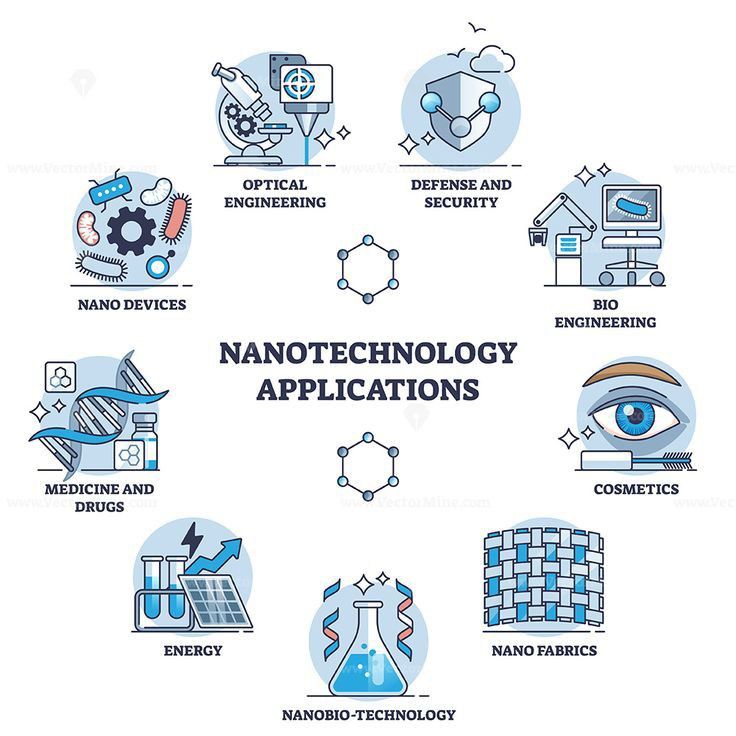
What is Nanotechnology?
Nanotechnology involves the study and development work and practical use of materials and devices that exist at the nanoscale range. A nanometer is one-billionth of a meter which makes nanotechnology operate at extremely high precision but also increased complexity. Scientists can create new materials which possess better strength and lower weight and increased efficiency and new functions by manipulating atoms and molecules at this scale.
The common keywords which people use in relation to nanotechnology include nanomaterials and nanoparticles and nanoscale engineering and nano science and nanomedicine and nanoelectronics. Scientists and engineers can create new solutions through these technologies which traditional methods could not achieve.
Applications of Nanotechnology
1. Nanotechnology in Medicine
Nanotechnology has delivered revolutionary solutions that benefit both the medical field and the healthcare industry. The technology provides its most essential service through drug delivery systems which use nanoparticles to transport medications straight to specific cancer cells. The method specifically targets cancer cells which results in less harm to healthy cells and reduced side effects.
Nanotechnology finds its applications across various fields which include cancer treatment and medical imaging and diagnostic tools and tissue engineering and regenerative medicine. The detection system which uses nano-based sensors enables doctors to identify diseases during their initial stages which leads to better patient outcomes. Scientists expect that nanorobots will acquire the ability to perform surgical operations and heal damaged body tissues throughout human beings.
2. Nanotechnology in Electronics
Nanotechnology enables electronics companies to create devices which operate at higher speeds while consuming less energy and taking up less physical space. The technology serves as an essential element for manufacturing semiconductors and microchips and transistors and sensors and high-resolution displays.
The complete operation of modern smartphones and laptops and wearable devices requires nanoscale components. Nanoelectronics enables artificial intelligence and quantum computing and high-speed data processing systems to become more efficient while maintaining their compact design.
3. Nanotechnology in Energy
Nanotechnology helps renewable energy systems that depend on sustainable energy sources to achieve significant progress. Through nanomaterial usage solar panels achieve better performance because the materials enable the panels to capture more sunlight which results in higher electricity generation. Nanotechnology improves batteries and fuel cells through better energy storage performance and faster charging capabilities and extended operational lifespan.
The technology plays a vital role in climate change mitigation because it prevents energy waste while enabling the creation of sustainable energy technologies.
4. Environmental Benefits of Nanotechnology
The applications of nanotechnology help support environmental protection and pollution control efforts. Water purification systems use nano-filters and nanomembranes to eliminate bacteria and toxic chemicals and heavy metals, which results in clean drinking water.
Nanotechnology provides benefits to air filtration systems and waste management processes and soil remediation techniques. The eco-friendly applications produce a cleaner and healthier environment.
The advantages of nanotechnology show benefits that spread across different industries. The technology delivers two main benefits which include
The tech produces precise results with high operational efficiency
The technology leads to decreased resource usage which results in lower energy requirements
The tech enhances product strength while extending product life
The technology provides environmentally safe solutions which require sustainable energy sources
The solution provides financial savings which last for extended periods
The advantages of nanotechnology make it a main factor which drives upcoming technological advancements.
Future of Nanotechnology
Nanotechnology will become developed through its future path which shows potential for innovative developments. Scientists predict that they will achieve major scientific breakthroughs which will advance their understanding of nanorobotics smart materials and artificial intelligence biotechnology and space exploration. Nanotechnology will create essential solutions for smart city development and advanced healthcare system creation and sustainable industrial system implementation.
The ongoing research and development work will cause nanotechnology to change how individuals conduct their daily activities and their work responsibilities and their technology interactions.
Conclusion
Nanotechnology provides advanced solutions which help science and industry to solve complex worldwide problems. The technology shows great potential because it can be used in medicine and electronics and energy fields and environmental protection. Nanotechnology will continue to lead scientific progress because it creates new technology which builds a better world through smarter systems and healthier people and environmentally sustainable practices.