Past vs. Present Construction Safety: How Technology Has Improved On-Site Protection
intoductino
The construction industry continues to rank as one of the most hazardous fields throughout its entire history. Workers in earlier times faced dangerous conditions because safety knowledge remained undeveloped and protective gear did not exist and safety regulations did not exist. Construction site accidents and injuries and deaths occurred with regularity. Modern technology now provides maximum safety protection through advanced safety equipment in construction sites. The implementation of advanced tools and smart equipment together with digital systems has created a new approach to risk management which increases worksite security.
Construction Safety in the Past
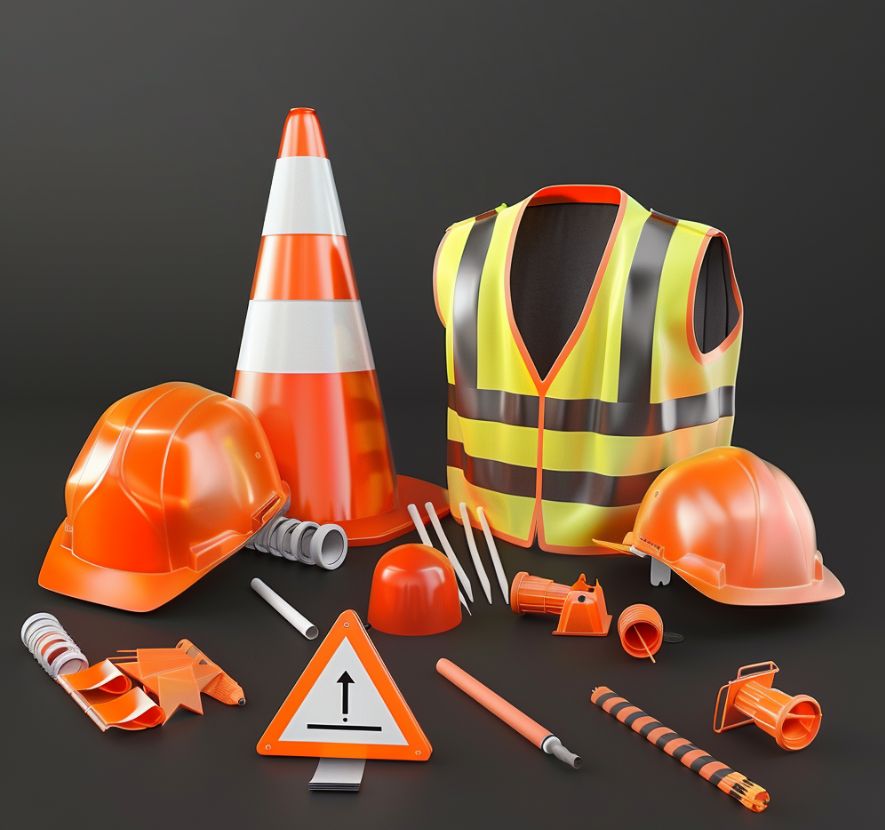
Construction safety during earlier periods required only basic protective equipment which workers used under manual supervision. Workers used helmets and gloves and boots as optional protective equipment which mostly consisted of poorly constructed items. The system had no established safety standards which required workers to receive minimal training on safety procedures. Workers depended on human observation to detect hazardous situations which created a risk of missing dangerous conditions. The construction site experienced two specific types of accidents which included falls from heights and equipment accidents and structural failures.
Rise of Safety Regulations and Awareness
Safety regulations and safety awareness have experienced continuous growth throughout history. The implementation of safety regulations by governments and industrial organizations started from their earliest development. The regulations established mandatory requirements for employees to receive training and use protective equipment and conduct safety inspections. The enforcement of regulations decreased accidents yet needed additional measures to achieve full efficiency. The actual change process started when technology began to assist construction sites in their safety operations.
Modern Safety Equipment and Wearable Technology
Construction workers today utilize sophisticated personal protective equipment (PPE) which includes modern safety equipment and wearable devices. Smart helmets function as impact detection systems while they also track worker fatigue. Wearable devices enable supervisors to respond to emergencies because they monitor heart rate body temperature and location data. High-visibility clothing with embedded sensors improves worker detection in low-light conditions which reduces the risk of collisions.
Drones and Site Monitoring
Drones serve as essential tools which protect construction sites throughout their active construction period. The technology inspects dangerous locations which include rooftops and scaffolding and deep excavations. This technology helps reduce worker exposure to hazardous work environments. The drones provide real-time information about the site which helps managers identify workplace dangers that exist before any incidents take place.
Artificial Intelligence and Predictive Safety
Artificial intelligence (AI) has revolutionized on-site protection. The AI systems use data from cameras and sensors to create models which forecast future accidents. The system tracks worker safety requirements which include proper safety equipment usage and it alerts supervisors whenever equipment usage violations occur. Predictive analytics help prevent incidents rather than reacting after they happen.
Building Information Modeling (BIM)
Building Information Modeling (BIM) enhances safety through its applications in both planning and construction stages. The BIM system produces digital models which help to discover structural hazards that need to be addressed before building work starts. Engineers can use simulation tools to recreate dangerous situations which enables them to develop safer operational procedures. The active safety measures reduce both operational mistakes and unforeseen hazardous situations.
Training Through Virtual and Augmented Reality
The safety training procedure has received better results because of virtual reality (VR) and augmented reality (AR) technologies. Workers can practice dangerous tasks in virtual environments without real-world risk. AR technology delivers safety instructions to workers who need guidance on how to proceed with their tasks on the site. The technologies enhance educational outcomes while decreasing the likelihood of human mistakes.
Conclusion
The difference between past and present construction safety is remarkable. Workers in earlier times used basic equipment and their own personal experience to maintain workplace safety. Modern technology delivers intelligent devices and continuous tracking systems and forecasting technologies and innovative educational approaches. The new technologies have made work environments safer and better protected employees. Future construction sites will achieve greater safety standards through ongoing technological progress which will create a safer working environment for all employees.